Broker Split Calculator
Use our broker split calculator to compare 70/30, 80/20, and capped brokerage models. Instantly calculate which commission structure earns you more per deal.


Understanding the Cost of Brokerage Affiliation and How It Impacts Business Sustainability
The Real Cost of Your Brokerage: Understanding the Split
In the real estate industry, your brokerage is more than just a place to hang your license; it is a business partner. Like any partnership, there is a cost involved, and that cost is usually defined by the Broker Split. While a "70/30" or "80/20" split is common dinner-table talk among agents, many professionals fail to calculate exactly how these numbers impact their long-term business growth and marketing budget.
Using a Broker Split Calculator is the first step in moving from an "agent mindset" to a "business owner mindset."
What is a Broker Split?
A commission split is the percentage of the Gross Commission Income (GCI) that an agent keeps versus the percentage that is paid to the brokerage. For example, on an 80/20 split, the agent retains 80% of the commission, and the broker receives 20%.
These funds are used by the broker to cover office overhead, legal compliance, administrative support, branding, and sometimes lead generation. However, not all splits are created equal. Some "100% commission" models charge high monthly desk fees, while "50/50" models might provide an abundance of "warm" company leads.
Calculating the "Real" Split
The math can get complicated when "off-the-top" fees are involved. Before your 80/20 split is calculated, many franchises take a 5% to 8% royalty fee. If you don’t use a calculator to account for these nuances, you might find that your "80% split" actually feels more like 72%.
By plugging your numbers into a dedicated calculator, you can see the literal dollar amount leaving your business on every transaction. This clarity allows you to determine if the value your broker provides (training, technology, and support) is worth the dollar amount you are paying.


About This Broker Split Calculator
A broker split calculator helps real estate agents compare different brokerage commission structures, such as 70/30, 80/20, or other custom split models. Since real estate income is commission-based, understanding how your brokerage split affects your take-home pay is essential.
This brokerage split calculator for real estate allows you to compare two models side-by-side. By entering your sale price, total commission percentage, and split percentages, you can instantly see which structure produces higher earnings per deal.
Choosing the right brokerage split can significantly impact your annual income. Even small percentage differences in commission splits can result in thousands of dollars in earnings over time.
Understanding Real Estate Brokerage Splits
Brokerage splits determine how commission is divided between the agent and the brokerage. Common models include:
50/50 split
70/30 split
80/20 split
100% commission with transaction fee
Capped commission models
Choosing the right brokerage structure can significantly impact annual income
The Agent’s Guide to Brokerage Splits: Finding the Right Financial Fit
Why Comparing Brokerage Models Matters
When evaluating brokerage options, agents should consider:
Commission split percentage
Annual commission cap
Referral deductions
Transaction fees
Desk fees
Production volume
High-producing agents may benefit more from capped or higher split models, while newer agents may value support or training structures. This broker split comparison calculator helps you analyze your potential earnings and choose the structure that best supports your income goals.
Use our Commission Calculator and Broker Cap Calculator together to evaluate complete earning scenarios.
What Exactly is a Real Estate Broker Split?
A brokerage split is the percentage-based sharing agreement between a licensed real estate agent and their managing broker. Because real estate agents must hang their license with a broker to legally practice, the broker provides the legal "umbrella," branding, and support in exchange for a portion of the agent's commission.
Common splits include:
The Traditional 70/30: The agent keeps 70% of the Gross Commission Income (GCI), and the broker keeps 30%.
The High-Split 80/20 or 90/10: Common in modern or "cloud-based" brokerages where the agent keeps a larger portion but may pay more in monthly "desk fees" or software costs.
The 100% Commission Model: The agent keeps the entire commission but pays a significant flat fee per transaction or a high monthly membership fee.


Now that you understand how brokerage percentages and referral fees impact your earnings, read our detailed guide on real estate commission splits.
Why Do Brokerages Take a Cut?
It can be tempting to look at a 30% split as a "loss," but it’s important to understand what that money supports. A brokerage uses its portion of your commission to fund:
Liability Insurance (E&O): Protecting you and the firm from legal mistakes.
Compliance Review: Ensuring your contracts are legally sound and your files are complete.
Marketing and Tools: Access to the MLS, CRM software, and signage.
Office Space: The physical location where you meet clients and process paperwork
Choosing a real estate brokerage is one of the most significant decisions an agent makes. While brand recognition and office culture matter, the brokerage split is the primary factor that determines your take-home pay. For many agents, the math can feel like a moving target, especially when different companies use different terminology to describe how they get paid.
Using a Broker Split Calculator allows you to strip away the marketing and see exactly how much of your commission stays in your pocket versus going toward your broker’s overhead.
The "Effective" Split: The Math You Need to Know
Many agents make the mistake of looking only at the "top-line" split. However, your effective split—what you actually take home after all fees—is the number that matters.
When using the calculator, be sure to account for "off-the-top" deductions. If your brokerage charges a 6% franchise fee on every deal, and you are on a 70/30 split, that 6% is often taken out before the 70/30 is calculated. This means you aren't actually keeping 70% of the total commission; your "effective" percentage is lower.
Comparing Splits: Value vs. Cost
The lowest split isn't always the best deal. A 50/50 split at a brokerage that provides you with 10 "hot" leads a month might actually make you more money than a 90/10 split at a brokerage where you have to pay for all your own lead generation.
When evaluating a split, ask yourself:
"What is my cost-per-lead at this brokerage?"
"Does this split include my transaction coordination and marketing materials?"
"Is there a cap on how much I have to pay in?" (This leads us to the concept of the Broker Cap, which is another vital tool for your business planning).


Using the Math to Negotiate
As you become a higher producer, your leverage with your broker increases. Most brokers are willing to renegotiate a split once an agent reaches a certain level of annual production. Having your numbers ready, knowing exactly what you paid in splits over the last 12 months, is your best tool for that conversation.
Conclusion
Your brokerage split shouldn't be a mystery. By consistently using a Broker Split Calculator for every deal, you can track your business growth and ensure your current brokerage remains the right financial partner for your goals.
If your brokerage offers a ceiling on your splits, make sure to use our Broker Cap Calculator to see when you'll reach 100% commission.
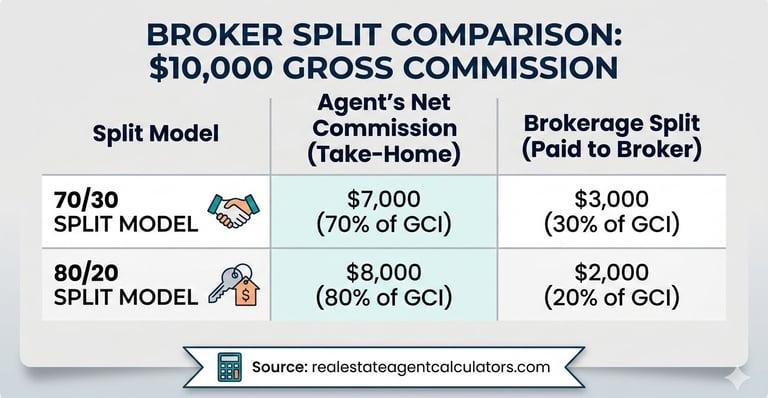
Real estate agents often need to quickly calculate commissions, referral fees, and brokerage splits when evaluating a transaction. These free calculators help simplify the math so you can focus on closing deals.
PrimeThread Insight
High-producing agents often benefit more from capped commission models than traditional split models. Once an agent reaches their annual cap, they may keep 100% of their commission for the remainder of the year depending on their brokerage agreement.
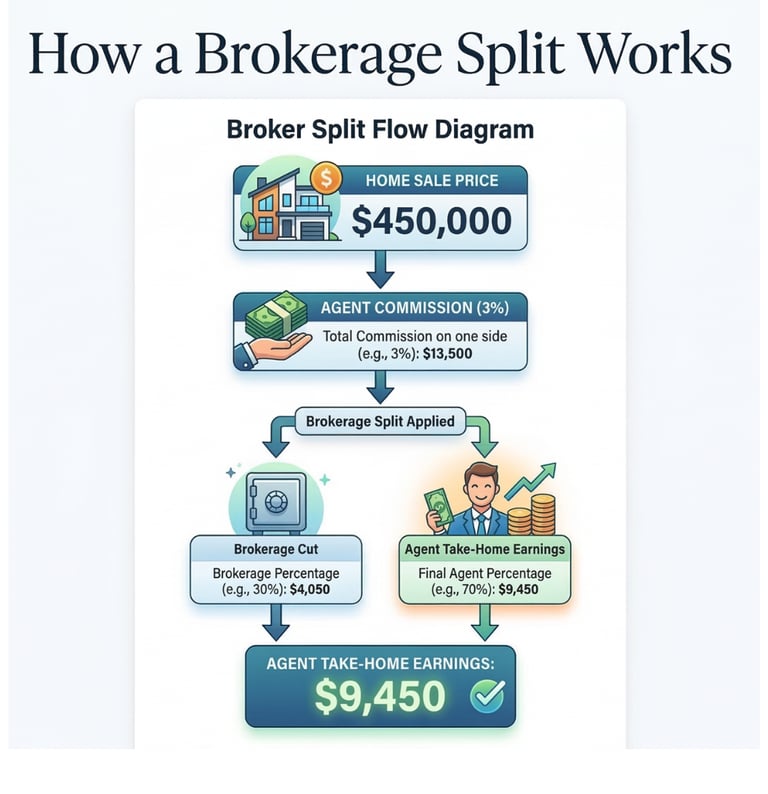
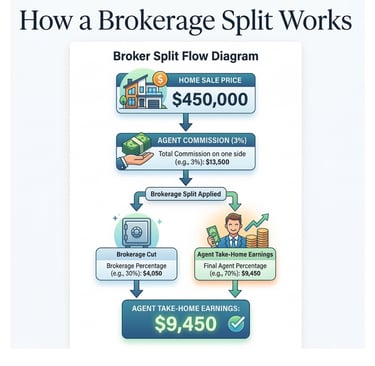
In most real estate transactions, the agent earns one side of the commission. If a home sells for $450,000 and the agent receives a 3% commission, the total commission on that side of the transaction would be $13,500 before brokerage splits.
The brokerage then receives its percentage of that commission according to the agent’s split agreement.
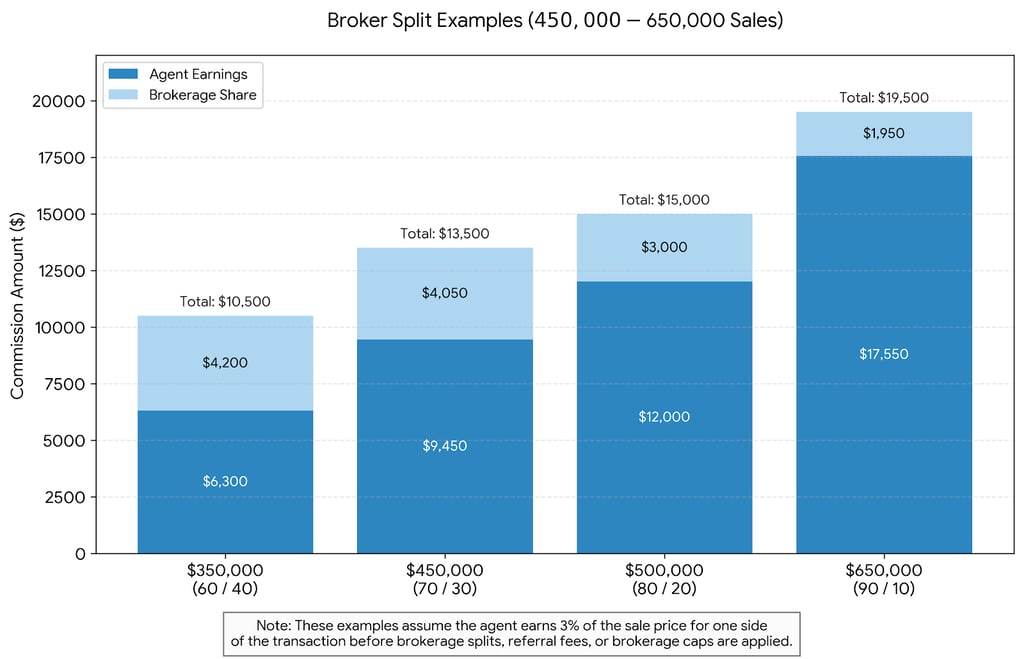
Source: realestateagentcalculators.com
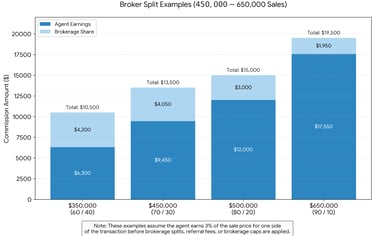
Source: realestateagentcalculators.com
Example: $500,000 Transaction
If an agent represents one side of a $500,000 home sale and earns a 3% commission:
• Commission earned: $15,000
• Brokerage split: 80/20
• Brokerage share: $3,000
• Agent take-home: $12,000
Understanding how brokerage splits impact commission helps agents compare brokerage models and estimate their net income from each transaction.


Check out the "Agent Income Planning Guide" before your next closing!