
Agent Income Planning Guide
Introduction
Real estate income can vary widely depending on transaction volume, brokerage splits, referral agreements, and commission structures. Understanding how each of these factors affects your take-home pay is essential for planning your production goals and evaluating brokerage opportunities.
The calculators on this site are designed to help real estate agents estimate their income from individual transactions and better understand how brokerage models impact overall earnings.
Step 1: Estimate Your Commission
Start by estimating the commission earned from a typical transaction. In many markets, the total commission on a home sale ranges between 5% and 6%, which is usually split between the listing brokerage and the buyer’s brokerage.
If an agent represents one side of the transaction, they typically earn about 3% of the sale price before brokerage splits are applied.
Use our commission breakdown tool to estimate the commission earned from a property sale based on price and commission percentage.
Step 2: Understand Your Brokerage Split
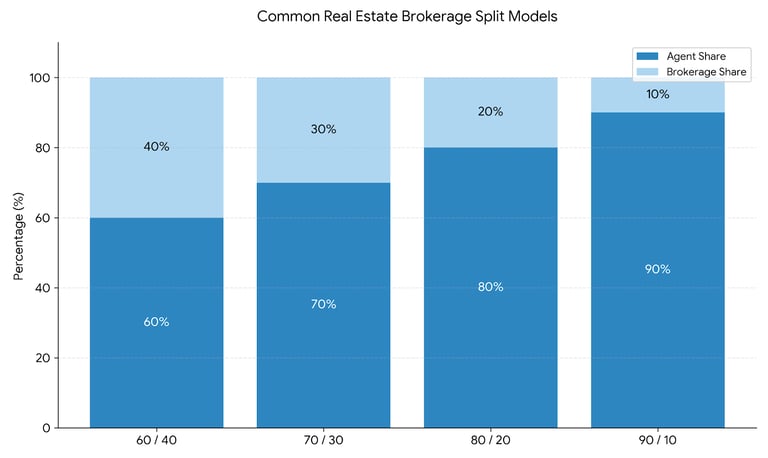
Most real estate agents operate under a brokerage split agreement. This determines how the commission earned from a transaction is divided between the agent and the brokerage.
Common commission split models include:
Use our broker split analyzer to see how different brokerage models affect your take-home earnings.
Step 3: Account for Referral Fees
Referral fees are common in real estate when one agent refers a client to another agent in a different market or specialty. Referral agreements typically range from 20% to 35% of the receiving agent’s commission.
Referral fees are deducted before brokerage splits, which means they can significantly reduce the final amount the agent receives.
Use our referral impact tool to estimate your commission after referral deductions.
Step 4: Track Progress Toward Brokerage Caps
Some brokerages operate on a commission cap model. Once an agent contributes a set amount to the brokerage during the year, the agent may earn 100% of the commission for the remainder of that year.
This type of structure can significantly increase take-home income for agents with higher production.
Use our broker cap tracker to estimate how many transactions it may take to reach your brokerage cap.
Example Agent Income Scenario
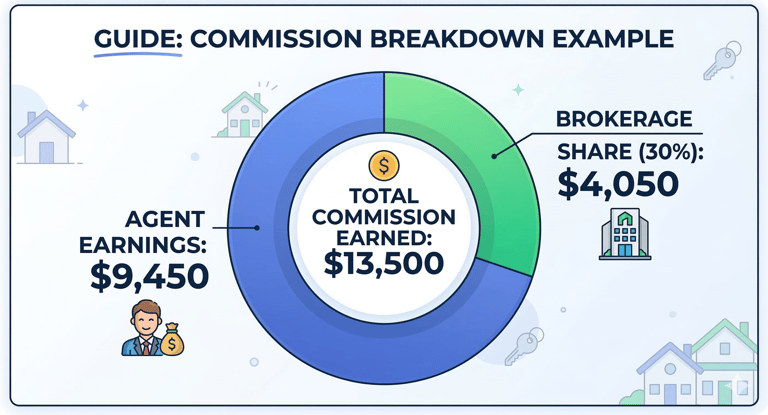
Let’s look at a simplified example of how a typical transaction might break down:
Home sale price: $450,000
Agent commission (3%): $13,500
Broker split: 70 / 30
If a 25% referral fee is also involved, the agent’s final earnings would be reduced further.
Why Income Planning Matters for Agents
Understanding how commissions, splits, and fees interact allows agents to:
Forecast annual income more accurately
Compare brokerage opportunities
Set realistic production goals
Plan business growth strategies
Real estate is a commission-based business, and having a clear view of how deals translate into income helps agents make better financial decisions.
Explore Our Tools
Use the calculators below to estimate commissions, compare brokerage splits, and evaluate referral scenarios.
Commission Breakdown Tool
Broker Split Analyzer
Referral Fee Impact Tool
Broker Cap Tracker
Source: realestateagentcalculators.com
Source: realestateagentcalculators.com